

5-Day UNESCO World Heritage Tour with Busan
Overview
Experience South Korea's remarkable UNESCO World Heritage Sites and rich cultural heritage on this 5-day journey. Travel through the ancient kingdoms of Baekje and Silla, explore centuries-old Buddhist temples, royal palaces, and archaeological treasures, gaining insight into Korea's history, traditions, and spirituality. The tour concludes in Busan, where you'll discover the city's blend of coastal scenery, vibrant culture, and modern energy before returning to Seoul aboard the KTX.
Tour Highlights
Changdeokgung Palace
Explore a UNESCO-listed royal palace celebrated for its architecture and harmonious Secret Garden.
Gongsanseong Fortress
Walk along the historic walls of this UNESCO-listed Baekje fortress overlooking Gongju.
Tomb of King Muryeong
Discover royal Baekje history through one of Korea's most important archaeological sites.
Haeinsa Temple
See the UNESCO-listed halls preserving the Tripitaka Koreana, more than 80,000 historic woodblocks.
Bulguksa Temple
Experience the refined Buddhist art and architecture of the ancient Silla Kingdom.
Seokguram Grotto
Visit a UNESCO stone sanctuary housing a serene and masterfully carved Buddha.
Itinerary
Day 1
Seoul Changdeokgung Palace - Bukchon Hanok Village & Ilseondong Village - Cheonggyecheon stream & Sejong street - National Museum of Korea
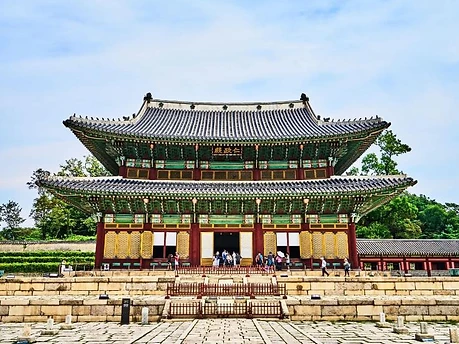
Changdeokgung Palace Visit Changdeokgung Palace, a UNESCO World Heritage Site and the best-preserved royal palace of the Joseon Dynasty. Admire its elegant architecture and harmonious blend with nature, including the beautiful Secret Garden (Huwon), once reserved exclusively for the royal family.
Bukchon Hanok Village & Ilseondong Village Stroll through Bukchon Hanok Village, a charming neighborhood of traditional Korean houses nestled between royal palaces. Then explore Ikseon-dong, where beautifully restored hanoks blend with trendy cafés, boutique shops, and local restaurants, creating a unique mix of old and new Seoul.
National Museum of Korea Visit the National Museum of Korea, the country's largest museum, home to an exceptional collection of over 220,000 artifacts. Discover Korea's rich history, art, and culture through exhibits spanning from prehistoric times to the Joseon Dynasty, including priceless National Treasures and Buddhist masterpieces.
Cheonggyecheon stream & Sejong street Stroll along the scenic Cheonggyecheon Stream, a peaceful urban oasis in the heart of Seoul, then walk through Sejong-daero, the city's main boulevard, where you'll enjoy views of Gwanghwamun Gate, Gyeongbokgung Palace, and statues of King Sejong and Admiral Yi Sun-sin.


Day 2
Seoul - Gongju - Buyeo - Daejeon Gongju Gongsanseong Fortress - King Muryeong Tomb - Buyeo National Museum
Gongju & Buyeo Unesco heritage Travel from Seoul to Gongju, one of the ancient capitals of the Baekje Kingdom and a UNESCO World Heritage Site. Explore Gongsanseong Fortress, a historic mountain fortress overlooking the Geumgang River, and visit the Royal Tomb of King Muryeong, one of Korea's most significant archaeological discoveries, where remarkable royal treasures were unearthed.
Continue to Buyeo National Museum, home to an exceptional collection of Baekje artifacts, including the celebrated Gilt-Bronze Incense Burner, regarded as one of Korea's greatest masterpieces.
In the late afternoon, transfer to Daejeon, one of Korea's major cities, for an overnight stay. Enjoy a relaxing evening with free time to explore the local area or dine at one of the city's many restaurants before settling in for the night. Overnight in Daejeon.


Day 3
Daejeon - Taekwondowon -Haeinsa Temple - Daegu Muju Taekwondowon - Haeinsa Temple - Daegu Yangnyeongsi Museum of Oriental Medicine
Muju Taekwondowon Taekwondowon is the world's largest Taekwondo training and cultural complex, dedicated to Korea's traditional martial art. Visitors can enjoy exciting Taekwondo demonstration performances, learn about its history and philosophy, and experience hands-on activities in a beautiful mountain setting.
Haeinsa Temple Haeinsa Temple is home to the Janggyeong Panjeon, a UNESCO World Heritage Site, specially designed to preserve the Tripitaka Koreana, which is inscribed on UNESCO's Memory of the World Register. The Tripitaka Koreana consists of over 80,000 wooden printing blocks containing the world's most complete collection of Buddhist scriptures.
Daegu Yangnyeongsi Museum of Oriental Medicine Daegu Yangnyeongsi Museum of Oriental Medicine introduces the history of Korean traditional medicine and Daegu's centuries-old herbal medicine market. Explore interactive exhibits, medicinal herbs, and traditional healing practices while learning about Korea's rich medical heritage.


Day 4
Daegu - Gyeongju Tumuli Park - Wolseong Place Site - Bulguksa Temple & Seokgulam Grotto - Donggung Palace - Wolryeonggyo Bridge
Tumuli park Visit the Tumuli park. It has more than 20 large and small tombs from the Shilla period. The tombs are presumed to be those of kings and court officials. Most of them are earthen and mound-shaped. Some double gourd-shaped ones are for the joint burial of a husband and wife. As those excavated were all found to be stone-pilled wood-lined chamber type, most of the tombs here are presumed to be of the same type. During the excavations of chenmachong and Hwangnamchong , numerous artifacts (including a gold crown, gold girdles, gold and silver personal ornaments, horse fittings, and weapons) were uncovered.
Wolseong Place Site This was the location of the palace-fortress during the Silla dynasty (57 BC ~ AD 935). The fortress takes after its name, which, literally translates to mean a crescent moon shape on top of a hill. Although the magnificent grandeur of the palace is now just an empty lot, it has been told that this area was filled with imperial buildings during the Silla dynasty. Currently, the region of Wolseong has a freezer made out of rocks called Seokbinggo, an archery range, a horse-riding field, and a traditional playground, which resembles the grounds of the Joseon Period (the dynasty that ruled the Korean peninsula from 1392-1910).
Bulguksa Temple & Seokguram Grotto Visit Bulguksa Temple, the finest masterpiece of Silla Buddhist architecture, and Seokguram Grotto, a UNESCO World Heritage Site renowned for its magnificent granite Buddha statue and exceptional stone craftsmanship. Together, they represent the artistic and spiritual achievements of the Silla Kingdom.
Donggung Palace and Wolji Pond & Wolryeonggyo Bridge Donggung Palace & Wolji Pond was the secondary palace of the Silla Kingdom, where royal banquets and important state events were held. Continue to Woljeonggyo Bridge, Korea's largest reconstructed wooden bridge, beautifully illuminated at night and reflecting the elegance of ancient Silla architecture

Day 5
Gyeongju - Busan - Seoul Haeundae Beach - Gamcheon Mural village - Jagalchi fish market - Haedong Yonggungsa Temple - Busan Station - Seoul Station
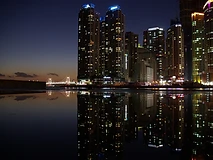
Haeundae Beach &Dongbaek Island Enjoy a stroll along Haeundae Beach, Korea's most famous beach, then walk through Dongbaekseom Island, a scenic coastal park known for its camellia trees, lighthouse, and beautiful views of Busan's skyline and the sea.
Gamcheon Mural village Gamcheon was a refuge to many people fleeing to Busan during the Korean War. The creative urban regeneration project started in 2010 and the success of the project attracts 1,400,000 Korean and foreign tourists to the village annually. It's earning this village the nickname of "Machu Picchu of Busan."
Jagalchi fish market Jagalchi fish market mainly deals with live and freshly caught seafood. Fish and shellfish are caught daily and sold fresh to consumers, almost right off the boat. The area is lined with tanks containing all sorts of fish, eels, squid, shellfish, and mollusks. Some areas have workers preparing the seafood for long term storage. You can watch as the fish get scaled, beheaded, chopped up, and dumped in a box of ice, all in record time.
Haedong Yonggungsa Temple Haedong Yonggungsa Temple is situated on the coast of the north-eastern portion of Busan. This superb attraction offers visitors the rare find of a temple along the shore line; most temples in Korea are located in the mountains.
Busan Station After the tour, guests will take the KTX high-speed train from Busan Station to Seoul Station. Upon arrival, your driver will meet you at Seoul Station and provide a comfortable transfer to your hotel, marking the end of your journey.


Private Tour Pricing
Price per person based on group size
Inclusions
- 5 days Private tour
- All admission fees to tourist sites
- Local English or Chinese-speaking tour guide with a Private Vehicle
- Door-to-door private transportation with a private minivan
- Accommodations (3 or 4-star hotel) – 4 Nights
- KTX Express Train Fare (Busan → Seoul)
Exclusions
- Personal expenses
- Lunch / Dinner
Interested in this tour?
Enquire or ask us to customize it to your travel style.